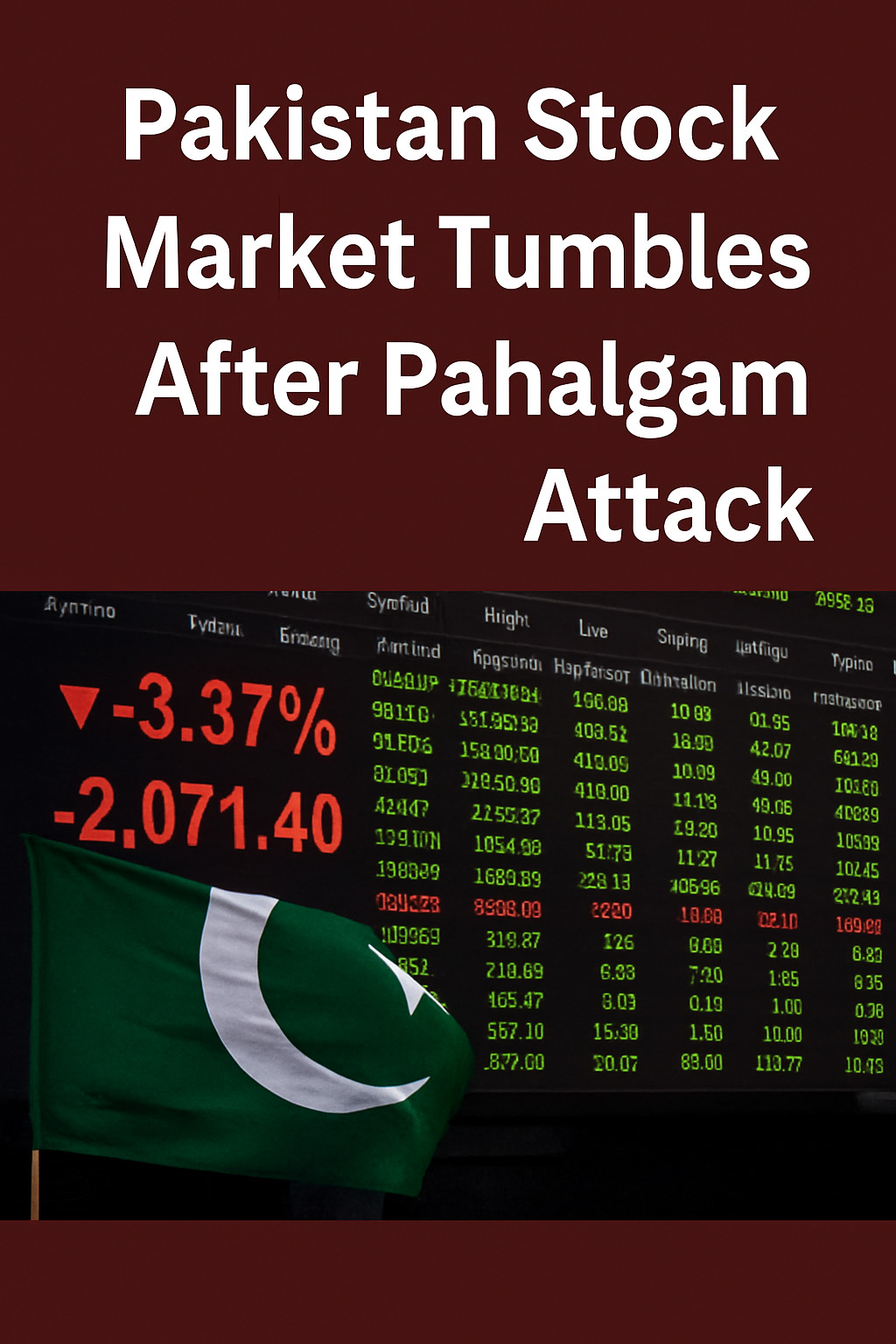

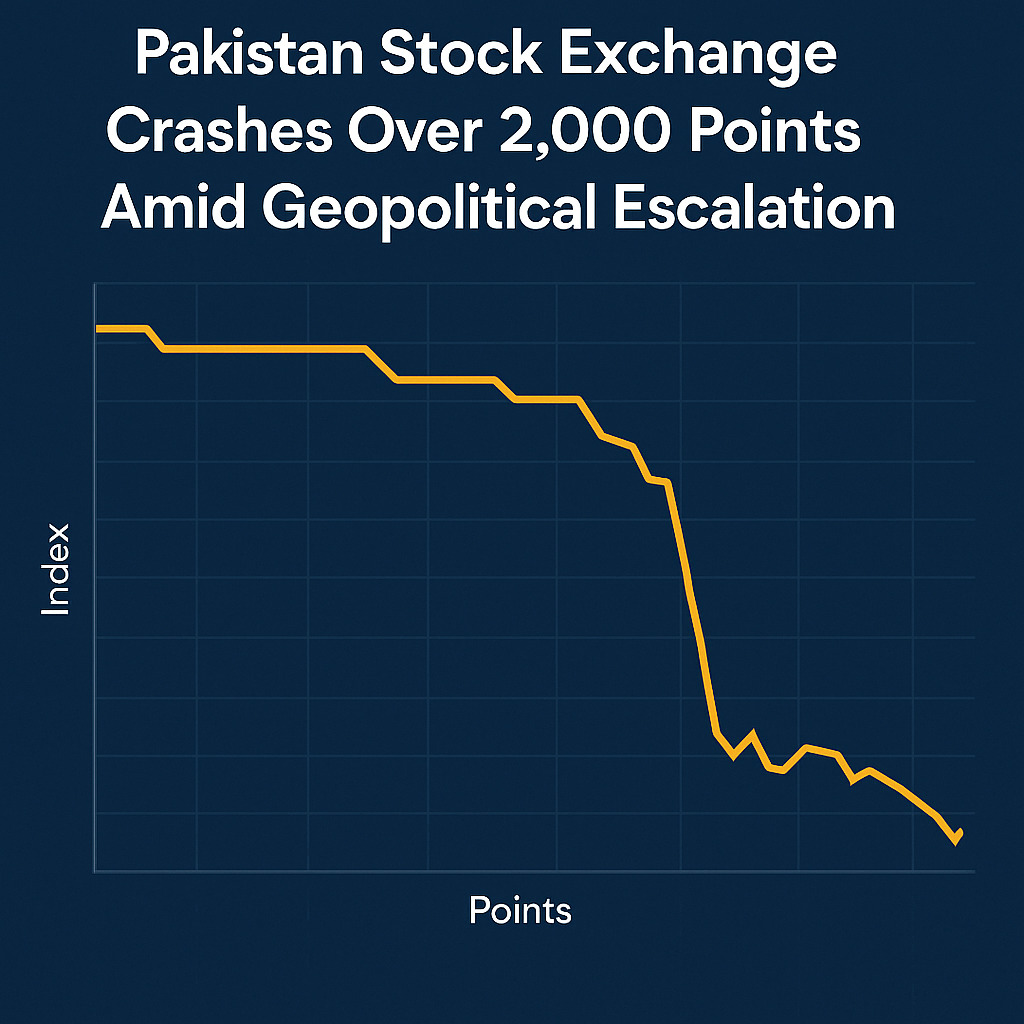
On April 24, 2025, the Pakistan Stock Exchange (PSX) witnessed its sharpest single-day decline in over a year, with the benchmark KSE-100 index plummeting by 2,111 points or 1.80%, closing at 115,115. The selloff was triggered by rising geopolitical tensions following a terror attack in India’s Pahalgam region and the Indian government’s immediate retaliatory measures.
Trigger: India’s Response to the Pahalgam Terror Attack
The sharp downturn followed India’s assertive diplomatic and strategic retaliation to a terror strike in Pahalgam, Jammu & Kashmir, which claimed 26 lives. The Indian government responded by:
- Suspending the Indus Waters Treaty with Pakistan
- Closing the Wagah-Attari border to halt trade and transit
- Revoking all visa privileges extended to Pakistani nationals
These decisions spooked regional markets and created panic among investors in Pakistan amid fears of escalating cross-border tensions.
Market Fallout
The PSX experienced intense selling pressure across all major sectors, with banking, cement, and textile stocks among the biggest losers. The steep decline in investor sentiment was further amplified by:
- Institutional selling due to geopolitical risk repricing
- Heightened fears of sanctions or global isolation
- Potential disruptions to bilateral trade and foreign fund flows
Economic Stress Adds Fuel
Adding to the sell-off was a fresh downgrade of Pakistan’s economic outlook by the International Monetary Fund (IMF), which lowered the country’s GDP growth forecast for FY25 to just 2.6%. Mounting inflation, high external debt obligations, and weakening forex reserves have put the country under immense financial pressure.
Global and Regional Impact
- The Pakistani Rupee saw increased volatility, with concerns of further depreciation in the near term
- Regional markets remained relatively steady, although investors in India turned slightly cautious
- Bond yields in Pakistan spiked as credit default risk perceptions rose
Market Experts’ Views
Analysts noted that the PSX crash was a classic case of a geopolitical overhang combined with underlying macroeconomic fragility. The uncertainty over possible Indian military or trade escalation has created a risk-off sentiment across sectors.
Investment strategists are now closely watching for any further retaliatory moves from either side and their potential impact on trade, diplomacy, and market confidence.
Conclusion
The April 24 crash of Pakistan’s stock market is a stark reminder of how quickly political and security events can destabilize markets—especially when coupled with weak economic fundamentals. As diplomatic tensions intensify, investors will need to brace for continued volatility in South Asia’s financial markets.
Disclaimer: This article is intended for informational purposes only. It is based on publicly available data as of April 24, 2025, and should not be considered as investment advice.
Published by Paisonomics.com – India’s trusted source for market intelligence, geopolitical impacts, and economic insights.